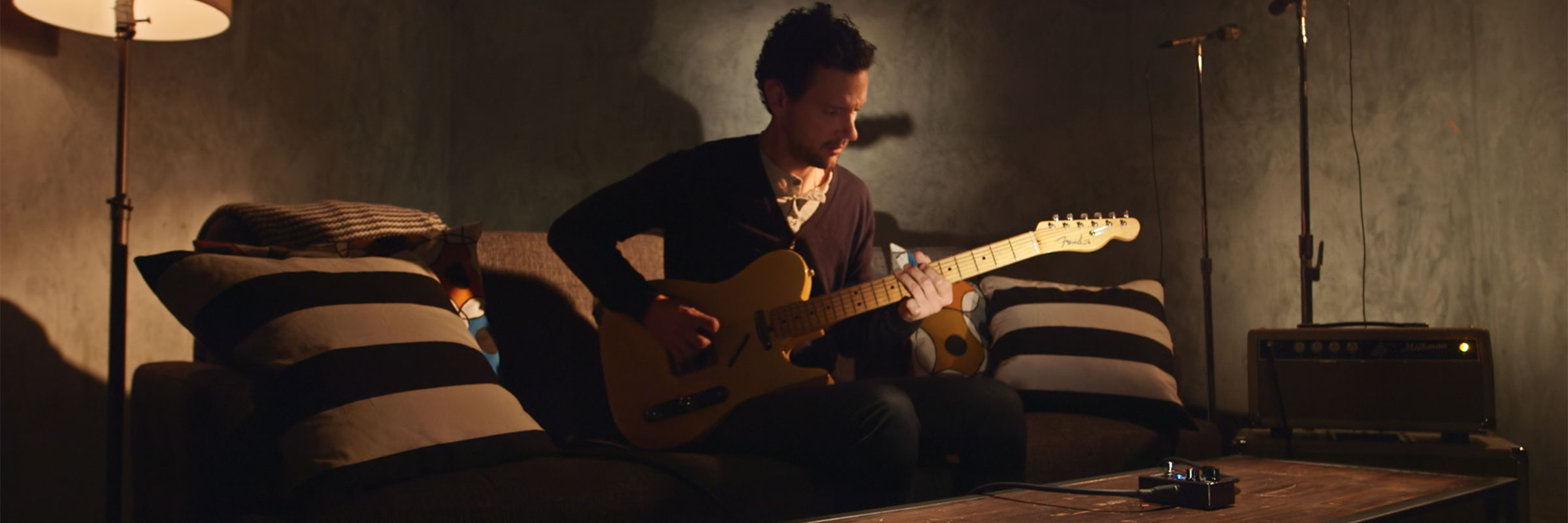
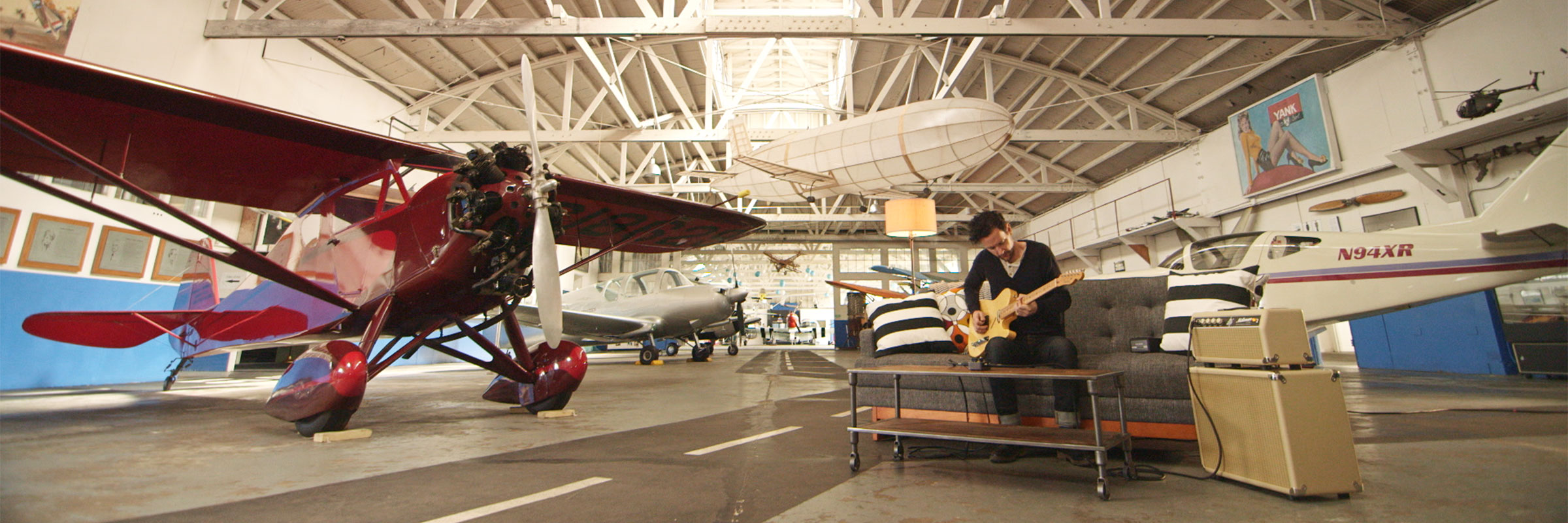
Reverb is that sense of place and depth you hear when sound is reflected off of solid surfaces. Architects have been designing concert halls and other enclosed spaces to enhance this effect with live music for more than a hundred years. Recorded music, however, can sound flat and unnatural if it doesn’t sound as if it actually exists in a physical space, so musicians and producers have relied on a number of methods to recreate the sonic characteristics of playing in acoustically rich environments.
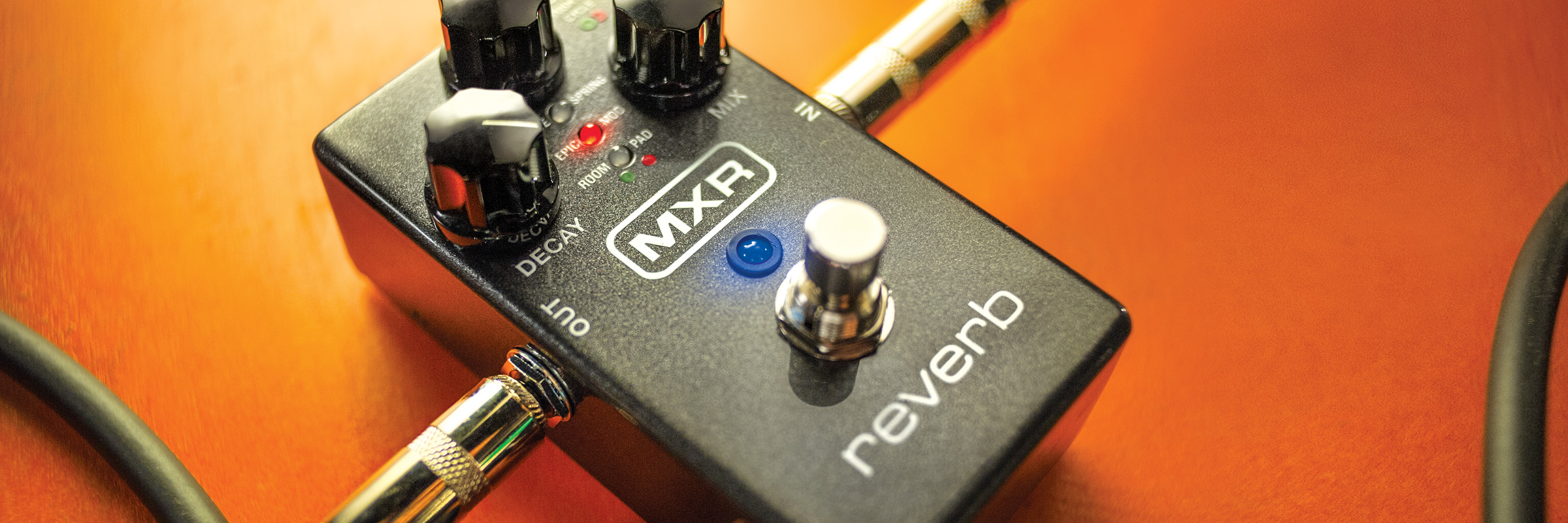
The MXR Reverb offers players the history of these methods and then some in a standard MXR box, featuring six distinct high end styles exquisitely crafted and tuned by the award-winning MXR design team. It’s got a simple three-knob setup, a hi-fi analog dry path, and a massive 20 volts of headroom thanks to our Constant Headroom Technology™ so that it plays exceptionally well with distortion, modulation, and other effects.
Musicians have a number of utilitarian and creative needs that the MXR Reverb handily addresses. If your recorded signal sounds dull and flat, for example, the MXR Reverb can give it a sense of place and atmosphere, making it sound more natural and alive. The same goes for an acoustically dead venue—adding some reverb can open up a room and breathe some life back into your signal. The MXR Reverb also adds a whole new range of tone-shaping options, whether binding the different elements of your sound together or creating atmospheric, otherworldly environments for your compositions to move and breathe within.
The MXR Reverb’s six different styles can help with all of these uses and more. We encourage you to experiment with all of them, but here’s a quick explanation of what each can bring to your sound.
ROOM
With the advent of recorded music, one of the first solutions to the “flat sound” problem was to play music inside of an enclosed space with a microphone sending the signal to a mixing board. The first of these “reverb chambers” was a bathroom, but specially designed rooms were eventually built into the recording studios themselves.
The Room setting captures the sound of those reverb chambers, adding subtle body and projection to your guitar tone at shorter decay times while longer decay times yield rich organic space that doesn’t wash out. Think old blues and jazz recordings. This setting is also great for livening up a dead recording sound.
Plate-based reverb—which creates its effect through the vibration of large, thin metal plates—was the next step in studio reverb evolution. It became the standard for recording studios because of its clean, bright sound, and, while quite heavy, they could actually be moved around.
The Plate setting provides a shimmering smooth wash of space that’s a go-to choice from the studio recording world. Use this setting to give your signal a classically lush, “hi-fi” sound, make up for dead venue acoustics when playing onstage, liven up a flat recorded sound, or bind all of the elements of your tone together.
Spring-based reverb as we know it today uses a transducer to vibrate one or more springs while a pickup transmits the generated sounds. Whereas plate units were large and expensive, spring units were small enough to put into amplifiers, and their low cost meant that the average guitar player could afford them. This style became a crucial component of old school surf rock tone.
Use this setting to recreate the classic bounce and twang of classic amp-style reverb. Like the Room and Plate styles, Spring style is great for revitalizing a flat recorded sound, and like the Plate style, works great as a “tone binder.”
The Epic setting sounds like you’re playing in a large, voluminous space such as a cathedral or a cavern. Think Pink Floyd. This setting is perfect for creating atmospheric, otherworldly environments.
Spring-based reverb as we know it today uses a transducer to vibrate one or more springs while a pickup transmits the generated sounds. Whereas plate units were large and expensive, spring units were small enough to put into amplifiers, and their low cost meant that the average guitar player could afford them. This style became a crucial component of old school surf rock tone.
Use this setting to recreate the classic bounce and twang of classic amp-style reverb. Like the Room and Plate styles, Spring style is great for revitalizing a flat recorded sound, and like the Plate style, works great as a “tone binder.”
The Mod setting combines smooth plate reverb with richly organic modulation in the feedback path. Use this setting to get classic shoegazer tones, liven up a dead recording, or create fluid, ethereal textures.
The Pad setting generates long synth sounds with a unique combination of sub-octave and octave-up with echoes mixed with synth/organ modulation and reverb, unlocking an expressive tonal palette that’s perfect for creating rich, arresting soundscapes.
Want a closer look at this pedal’s advanced features? Check out our own demo and another one from our buddy Paul Riario from Guitar World Magazine below.
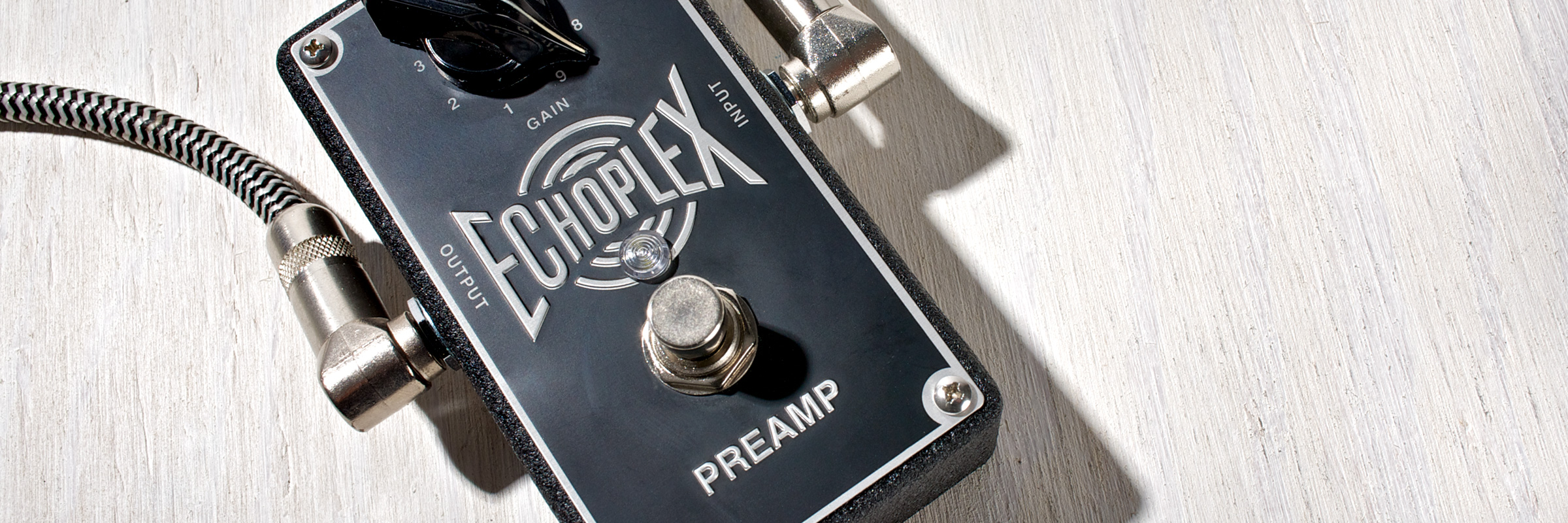
The EP101 Echoplex® Preamp recreates the magic of the Echoplex EP-3’s preamp section, coating your guitar signal with secret sauce. What do we mean by that, and what’s the deal with the EP-3? Read on!
The Echoplex EP-3
The Echoplex EP-3 tape echo unit has become a legendary piece of gear among tone connoisseurs, but not only for its delay effect. Guitar players discovered that the EP-3 somehow sweetened up their tone, whether or not the tape echo effect was active.
Built using Field Effect Transistors instead of the tubes used by the EP-1 and EP-2, the EP-3’s preamp provided an organically warmer and fatter sound when players ran their signal through it. Guys like Jimmy Page, Eddie Van Halen, and Eric Johnson made it an integral part of their sound, taking advantage of the way it warmed up the distorted tones of a cranked tube amp while taming high end harshness.
Nowadays, the EP-3 is difficult to get your hands on—a fully intact, working model could set you back more than $500. If you do get your hands on one, you will be presented with a few potential issues. First, they require a bit of maintenance. Second, their sound and behavior—from model to model and even from use to use with an individual unit—can be inconsistent. Finally, these things are the size of a small amplifier head. Eric Johnson has been known to put one right on his pedalboard—not everyone wants to sacrifice the real estate or lug another 15 lbs. of gear.
The EP101: Secret Sauce at Your Feet
But have no fear—the Echoplex Preamp gives you the sound of that prized box with none of its complications. Dunlop’s Director of New Electronics Jeorge Tripps designed this pedal with the exact same signal path as the EP-3, and to get the secret sauce just right, he used two of the finest EP-3 specimens to ensure that the EP101 nails that classic sound across its range. Now, you can get the EP-3’s sonic mojo in a small stompbox and gig with confidence that it will do what you need it to do to every time you kick the switch.
While the EP101 can boost your signal by up to 11dB, that’s not its main purpose, nor is it a clean and transparent. The EP101 is all about conditioning and sweetening up your tone—use it as a lead boost and crank the Gain control for increased output and some light asymmetrical clipping, use it as a second channel to change up your tone mid-set, or leave it on all the time. However you use it, the Echoplex Preamp will breathe new life into the sound of your whole rig.
Where should you put the EP101 in your signal chain?
As with any pedal, experiment with the Echoplex Preamp’s position in your signal chain. We do have our own suggestions, of course. For a great lead sound, try placing it after your overdrive and distortion pedals to add girth and a bit of volume boost. If you want the pedal’s active all the time or you want to use it as a second channel tone, try placing it either at the beginning or end of your signal chain. Also, got a Way Huge Supa-Puss Delay? Placing the Echoplex Preamp in front of that box will get you close to the EP-3’s tape echo sound. But again, we emphasize, experiment! Find your own sound. The EP101 will add a whole new dimension to your tonal palette.
Want to see the Echoplex Preamp in action? Check out our own demo below. After that, check out Sonic State’s discussion with Adrian Utley from Portishead, featuring a comparison of the EP101 and the EP-3.
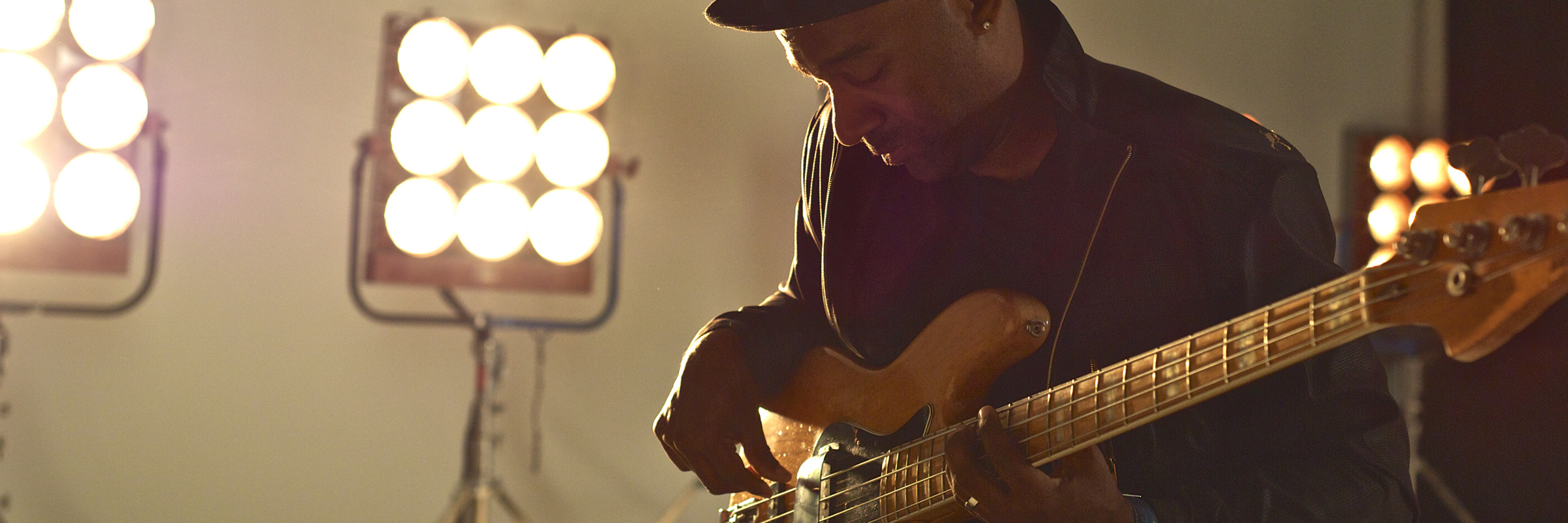
Simply put, Marcus Miller is a living legend. His prowess as a multi-instrumentalist, songwriter, and composer has earned him two Grammy awards and the esteem of critics and musicians across genres. As a sideman, his credibility is well-attested—Marcus has played, and in many cases written and produced, for everyone from Miles Davis and Luther Vandross to Whitney Houston and Mariah Carey. His solo career has further cemented his status as the preeminent living bass player. With his groundbreaking style and carefully cultivated sound, Marcus has created a unique and massively influential musical voice. Marcus has honed that voice for decades, in part by embracing innovation and using the best tools available. And that’s what brought him to Dunlop Super Bright Bass Strings.
We sat down with Marcus to talk with him about where his new signature strings fit into the evolution of his musical voice as well as a number of topics, including the importance of tone and finding your own sound. This guy’s a true master, with insights that are valuable to any musician, whether or you play bass or not. Check out the video below for some of the highlights from our conversation—soundtracked by the legend himself. The full interview is packed with even more of Marcus’ masterful insights, so be sure to read that after you watch the video.
How important is tone for a musician?
Marcus: When I started playing bass—I was probably 13 years old, something like that—I wasn’t really at the point where I could tell the difference between the important elements of music: technique, intonation, tone. So I was just going by instinct, just playing the bass. I had a Fender Jazz Bass, and whatever sounded good, even if it was accidentally arrived at, I stuck with it. Later on, I realized that tone is the first thing that impresses people about your sound. That’s the first thing that people are struck by.
All the bass players I admired had a signature sound.
That first note, it makes an impression. I know a lot of great musicians who play some amazing music, but their tone isn’t that great, and you have to get past that as a listener. You have to go, “Ok, my first impression wasn’t that great, but man, he’s playing some great stuff.” But the really, truly great musicians who really make a full impact, to me they have the whole package, and the first element is tone. You hear a guy play that first note and you go, whoa! That’s everything, man. First impressions, right?
All the bass players I admired had a signature sound. Yes, they all had great technique, but you heard one note, two notes, and you knew it was Stanley Clarke, you knew it was Jaco Pastorius, you knew it was James Jamerson. And I really wanted to see if I could find something, maybe not on that level, but something that was easily identifiable as me. Once I got a sound that I liked, I didn’t fool around too much with it. Same bass, same settings, and I just changed the notes, I just changed what I’m playing. But I didn’t really fool around with the sound too much because I felt like I had something that was really identifiable, and that’s so hard to find as a musician. So tone is everything.
When did you first realize you’d found your sound?
Marcus: I was talking to a mentor of mine, a fantastic drummer named Lenny White from my neighborhood in Jamaica, Queens in New York, and I said to him, “Man, I want my own sound, how do I get my own sound?” I was probably 17 at the time, and we had these amazing musicians in the neighborhood who I admired. When we went to these jam sessions, I’d be walking to the club from my car parked two blocks away, and I already knew who was in there because the sounds were so identifiable, even from down the street.
So I’m saying to Lenny White, “Man I really want my own sound, how do you do it?” And he says, “You can’t worry about it, you just keep playing, and keep playing, and then one day, you’re going to hear a recording of yourself and go, ‘Oh that’s me.’” So he gave me some real abstract Karate Kid kind of instructions on how to get your own sound.
Later on, when I’m 21, I get a call from Miles Davis, and he says, “Come to the studio, I’m going to record.” I ran to the studio, and we played, and I’m like, “This is Miles Davis, man, I got to play something good.” And then we heard the playback in the control room, and I remember saying to myself, “Oh wow, that’s me.” I recognized that sound as me. And once you find your own sound, you got to hold on to that, man. You got to hold on tight, because that’s something that a lot of people don’t ever get.
So, I said to myself, now that I have a sound, now I can go to the next level, now I can start to be creative, now I can start to try different techniques, improve my technique, improve my creativity, because I got the first element, the most important element. Sound was really the launching pad for the rest of my playing.
How important is style for a musician?
Marcus: Once when I was talking to Boz Scaggs, he said something that I’ll never forget: “People don’t buy technique. They don’t buy anything but style.” That’s what draws people to an artist—your style, your view of the world, the way you present yourself, but more importantly, the way you see things. You got a lot of great musicians, and then you got artists, and not all great musicians are artists.
I get demos from musicians, and they say, “Check out my demo, I want to make a record.” And the first song is a funk song, the second song is a salsa, and the third song is a bossanova. I say, “Each one is like a completely different player.” And they say, “Well, I want people to know I’m well rounded, that I can do it all.”
You got a lot of great musicians, and then you got artists, and not all great musicians are artists.
That’s really important, but what people want to know is, do you have a unique point of view? And I know the problem, because I was a studio musician for like 25 years. People think they know all the stuff I played on, but I played on hundreds of records that you don’t even know I played on. I’m on Mariah Carey records, Whitney Houston records, where I’m just playing what’s necessary. As a studio musician, you became who you needed to become for each record.
But eventually, I started moving more to an artist mentality where I found my own sound, my own style, and I decided I was going to try to make that sound and that style work in whatever situation I’m in. So, the difference between me 30 years ago and me now is that I have a much clearer point of view about how I want to play and what I think music should sound like. And that’s me really trying to become an artist.
Why work with Dunlop?
Marcus: So the thing about having your own identifiable sound, your own identifiable music, your own identifiable style, is that you still have to grow. You still have to figure out a way, particularly if you’re playing jazz music or any kind of improvisational music to maintain your identity. And it’s a very tricky thing. Because if you stay in the same place, then you’re staying in the same place. And if you change too quickly, you might lose who you are.
You still have to figure out a way to maintain your identity.
Now, everybody has their own version of how to deal with this, but for me, I wanted to continue to evolve. So I’m looking at these Dunlop strings, man, and I’m going, whoa, this maintains what everybody’s known me for, but it has a little bit of my old 17-year-old sound when I was playing more raw, you know what I mean? And I’m already feeling myself wanting to get back to that. This has the best of both worlds.
So it’s a way to grow, by finding this new string. And this is the whole thing: trying to evolve but maintaining who you are at the same time.
Why is it so important to evolve your sound?
Marcus: I always feel like I want to continue to evolve, like I want to push forward. And people ask me, why? Why do you feel like you need to change when you have such a good thing going? But it’s boring otherwise. You know what I mean? I really think that if you’re an artist, your responsibility is to show people the world as it exists today through your eyes. That’s what all artists do. It doesn’t even have to be music, it can be writers, photographers, comedians, they all do the same thing, they all present us with the world as it exists now, but through their own filter, and that’s what makes them interesting.
In the ’8os, everything was really, like, techno, and everything was clean, and everything was very exact because we had just discovered these machines that we could make music with, so we were playing really, like almost in a robotic fashion a lot of times. Because that was where the world was. We had just been introduced to these computers—how do we learn to live with them?
And for a while, computers were dominating. Everything sounded like this, and we found cool ways to do that, but now people are a lot more comfortable with the technology, people are a lot more comfortable with computers. And now things are starting to sound a little bit more natural, at least in a lot of areas of the world and a lot of areas of music.
So for me, I want my sound to sound less high tech. I want to still have a full range of bass and treble, but I want to get a little bit more growl, I want to get a little bit more urgency in my sound. And that’s how I used to play back when I was first starting. In New York, everything was always aggressive, and people didn’t want to hear jazz, so if you were going to play jazz, you had to play with an attitude. We were like 16, 17 years old, and people were like, I don’t know what they’re doing, but they’re really into it, I guess I got to respect them. That’s how we used to hit it. So now, I’m wanting to get back to that.
And in my band, I got like 21, 22, 25 year olds who are feeling like they want to prove themselves, like they want to make a statement, and that’s inspiring me. I want to make sure my sound is in there pushing them.
What is the role of the bass player?
Marcus: A lot of bass players who are solo artists are just sitting there waiting for their solos. But for me, I’m doing just as much work when I’m playing behind you—sometimes more work. It’s a shame that a lot of young bass players don’t recognize how important driving a band is. But that’s what a bass player does, man. You drive the band.
I’m really into that role.—it’s as important to me as playing a great solo. And with these strings, man, with this sound I’m going for, I want to make sure that I’m driving you, that I’m pushing everybody, that I’m pushing the musicians to be creative and reach new heights.
What are you trying to accomplish as an artist?
Marcus: When I first started playing music, I just wanted to be a good musician. My father’s a musician, his father’s a musician—I come from a musical family—so I just wanted to step into the shoes that were laid out for me. And then I’m in my neighborhood in New York, everybody had a band, and I just wanted to be in a good band and just be known as a good musician.
At each step, I just looked to see what else is available from that new step.
And what happens is that, as you get older, you start realizing the possibilities with music. So first, I just wanted to play the bass, I just wanted to be good. Then I saw somebody who had just written a song, he said, “Hey man, here’s a song I wrote.” And I said, “Wow, I would love to write a song on my own.” And that became a goal. And then I saw arrangers making sure that everybody’s part worked together, and I got into that. And then producing. At each step, I just looked to see what else is available from that new step. I’d reach a certain level and go, okay, now what?
And so, for me, at this point, I’m still going, okay, now what? I’m recognizing how powerful music is, how it can communicate things that people have difficulty communicating with words. So we’re playing in Africa, we’re playing in Russia, we’re playing in China, we’re playing all over the world, and we’re able to bring people together who normally wouldn’t come together like that.
So now, what I’m feeling, is how effective, how powerful music can be. That’s my next goal, to take advantage of that, to communicate, try to establish goodwill around the world. It sounds really kind of corny, but when you’re on the stage, man, and you can’t say hello in the audience’s language, but you got like, six, seven thousand people all moving together, all sharing the same emotions, you begin to realize that we all have a lot in common. We just need to establish that first, and then work out the details.
Let’s at least establish that we have a universal commonality, and music is the best example of that.
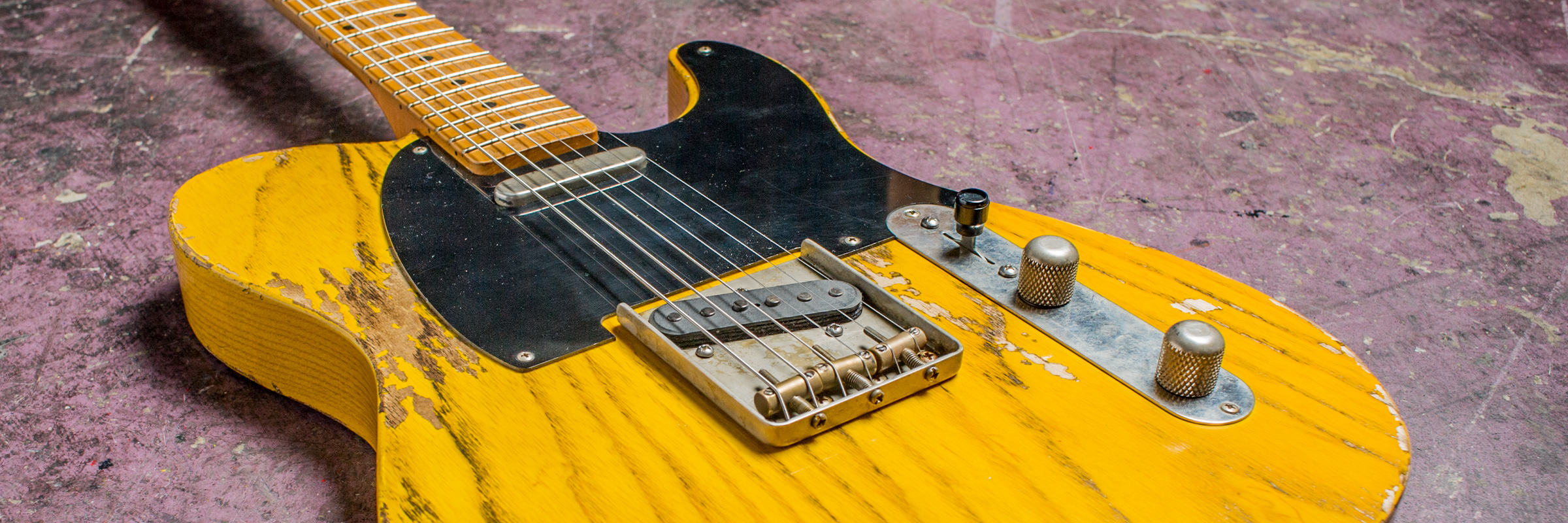
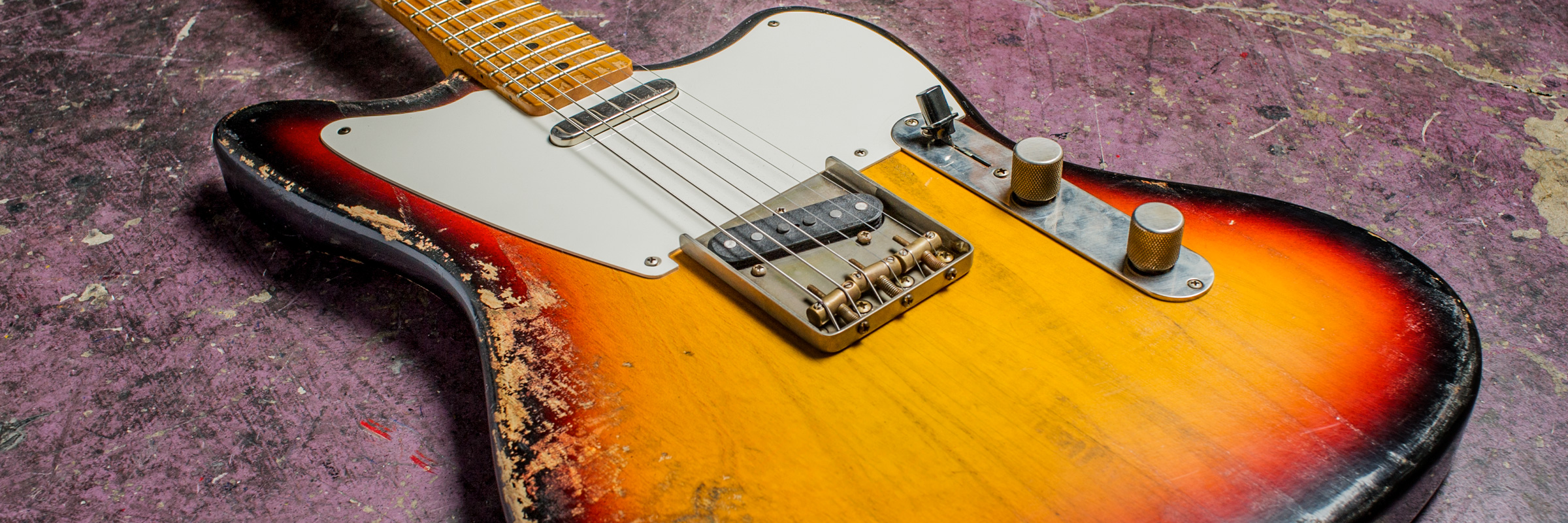
We love relic’d instruments at Dunlop. They look awesome, of course, with all the visual charm of an instrument that’s been through a lifetime or two on the road. But there’s more to a relic’d instrument than its appearance.
Relic’d instruments are generally very well-made.
Relic’d instruments are generally of high quality, with a lot of them built by boutique manufacturers who give each instrument they produce a lot of attention.
They feel just as broken in as they look.
If you’ve ever put your hands on a vintage instrument that’s been played a lot, then you know that playing an instrument like that is as comfortable as putting on your favorite old pair of shoes. Builders go through a number of steps to create that worn-in feel in their relic’d instruments, and they tend to do it very successfully, whether it’s a Mexican-made Fender Roadworn Jazz Bass or a Tele-inspired guitar from San Francisco-based Rock N Roll Relics.
They sound great.
In order to be true to vintage instruments, relic’d instruments are often finished with nitrocellulose paint, which is thinner than the polyurethane used by most modern instruments and really allows the sound of your instrument to blossom.
No need to obsess over their condition.
So you have a ’64 Jazz Bass, black body with matching headstock. You love the way it sounds, the way it feels. You love the vibe its nicks and chips give off. But let’s be honest–you’re not going to bring that prize out to a dive bar in your nearest metropolis.
With relic’d instruments, you just don’t have to worry as much. If you’re playing out, you can leave your valuable vintage instrument at home and take out the relic’d one instead so you keep the same vibe. Any dings you make on it won’t matter, because they’re no different from what the instrument already has. And you can mod the instrument with little fear of damaging it.
Like the guitars photographed above? Check out Rock N Roll Relics. We think their relic work is some of the best in the business.
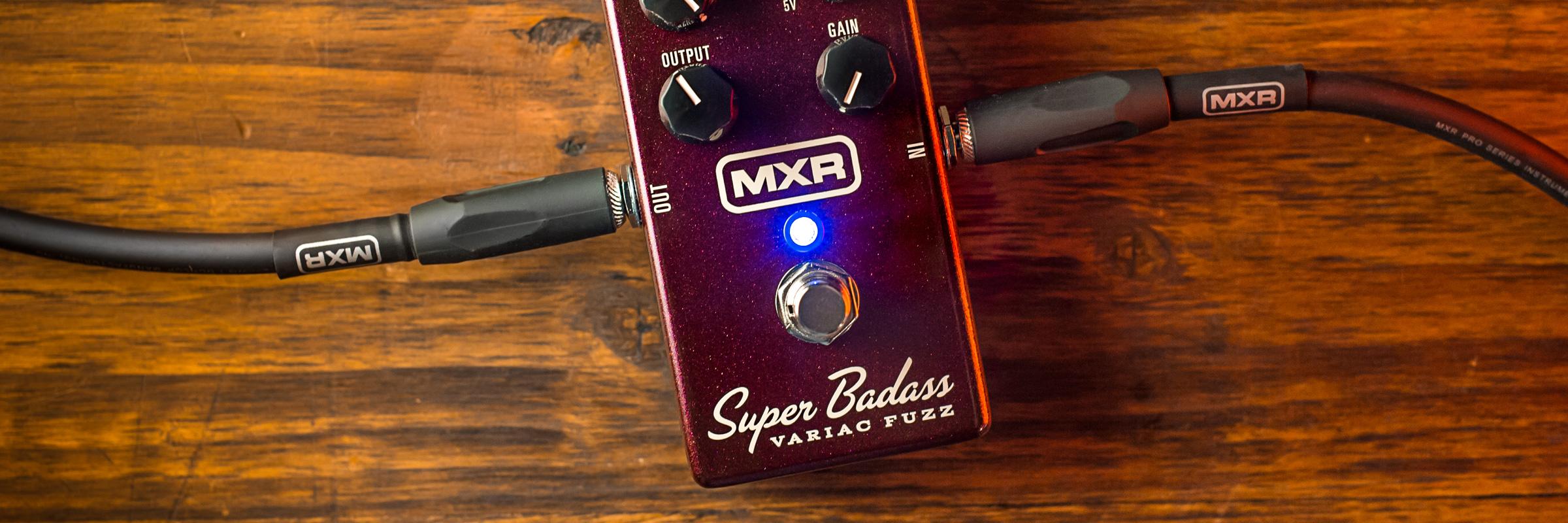
The MXR® Super Badass® Variac Fuzz delivers a big, aggressive, and biting square wave tones with a nice touch of smooth compression. Its Tone, Output, and Gain controls provide plenty of fine-tuning potential, but what makes this pedal a dream come true for tonechasers is its Variac control.
The Variac control allows you to vary the pedal’s voltage from 5 to 15 volts, which also changes how much headroom is available—lower voltage means lower headroom and vice versa. Many pedals sound radically different depending on how much headroom they have.
Setting the Variac control around 12 o’clock gives you what is essentially Super Badass Variac Fuzz’s default 9-volt sound. It’s great with the Gain and Output controls turned up and pushing hard into a somewhat driven tube amp for a very stoner rock or shoegaze vibe, depending on what other effects you’re running.
Players chasing vintage tones will want to turn the Variac control counterclockwise to drop the voltage below 9V for the sound you get from a battery that’s running out of juice. The resulting decrease in headroom will produce a spitty low-fi fuzz reminiscent of psychedelic rock. The only way to get this sound back in the day was to manage a collection of half-dead batteries, but now you can do it with the twist of a knob.
Turning the voltage up past 9V gives you a totally different sound. Going clockwise form 12 o’clock, the Variac control opens up the Super Badass Variac Fuzz to something more like an organic overdrive with fuzzy edges.
That’s just the start of what you can do with the Super Badass Variac Fuzz. Use the Output, Tone, and Gain controls to feel out the range of tones provided by the Variac control. Use your guitar’s volume knob to play with the intensity of the fuzz. Try it with different amps and pickup types. Experiment with other effects—this thing sounds killer with a Cry Baby® Wah, for example.
Bottom line, the Super Badass Variac Fuzz is an incredibly versatile pedal with a range of textures and timbres that can be dialed in quickly and easily. Now put one on your pedal board and start chasin’ them tones.